Zircon Industry Association, 24 Old Bond Street, Mayfair, London W1S 4AP, UK

Nearly half of the world’s zircon production is used as an opacifier in ceramic tiles, sanitaryware, and tableware. Its effectiveness stems from zirconium silicate’s high refractive index, which scatters light more effectively to produce:
These characteristics are critical for premium-quality ceramic surfaces.
But zircon’s benefits don’t stop at appearance. Its inherent chemical stability and abrasion resistance make it invaluable in ceramic frits and glazes, extending the life and durability of finished products.

Not all zircon is created equal. Premium grades provide superior performance in ceramics due to two main factors:
1. High purity
Top-quality zircon must contain high levels of ZrO₂ plus HfO₂, with minimal contaminants — especially those that influence colour. Low impurity levels ensure consistent whiteness and optimal optical performance.
2. Superior crystallinity
Zircon crystals vary depending on their geological history. More perfectly formed, less-damaged crystals deliver better opacity and whiteness. This makes crystal structure a key contributor to ceramic performance.
A Life Cycle Assessment (LCA) conducted with Centro Ceramico di Bologna demonstrated that zircon offers clear sustainability advantages. When used as an opacifier in super-white porcelain tiles, zircon showed a 20–30% lower environmental impact across most impact categories compared to alternative materials. Only ozone depletion potential showed similar results.
Zircon’s stronger opacifying power—due to its high refractive index—means manufacturers can achieve better results with less material, driving these environmental benefits.


Zircon is emerging as a material that helps mitigate the urban heat island effect.
Because zircon pigments have high solar reflectance, they reflect a broad spectrum of sunlight. When incorporated into roof tiles, buildings stay cooler naturally, reducing energy use and improving urban comfort.
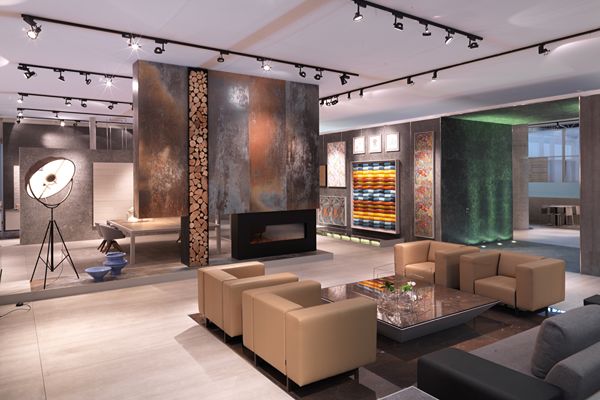
Looking to the future, the ceramic tile industry is increasingly demanding large-format slabs, high-definition digital designs, and thinner, lighter tiles.
Zircon’s unique attributes and versatility continue to make it essential in these new formats. Its ability to maintain opacity and whiteness, its abrasion resistance, durability, and chemical and thermal stability ensure that even the most advanced ceramic designs achieve the desired aesthetic and functional performance.